The year 2026 marks a historic milestone—the 50th Anniversary of the establishment of diplomatic relations between Viet Nam and Thailand (1976–2026). This remarkable journey reflects a profound transformation from initial engagement to a Comprehensive Strategic Partnership (upgraded in May 2025), contributing meaningfully to peace, stability, and development in Southeast Asia. Amid an increasingly complex global landscape, the bilateral relationship transcends its traditional scope, underscoring the central role of ASEAN in fostering regional cooperation.
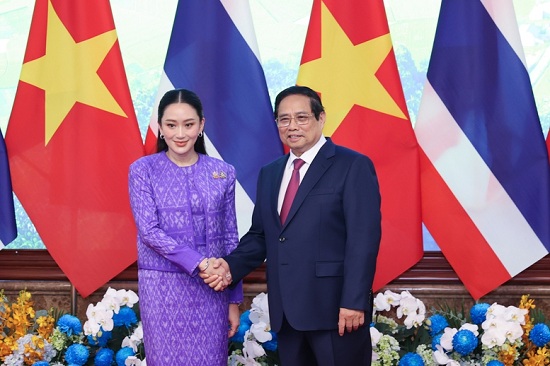
At the invitation of Prime Minister Pham Minh Chinh, Prime Minister of the Kingdom of Thailand Paetongtarn Shinawatra paid an official visit to Viet Nam and co-chaired the 4th Viet Nam–Thailand Joint Cabinet Meeting from May 15–16, 2025.
*From post-war beginnings to constructive engagement
Diplomatic relations between Viet Nam and Thailand were officially established on August 6, 1976, at a time when Southeast Asia was emerging from the turbulence of the Cold War. A pivotal turning point came in the late 1980s and early 1990s, as Viet Nam embarked on its *Đổi mới* reforms and pursued international integration. Viet Nam's accession to ASEAN in 1995 further laid a solid foundation for the two countries to draw closer—transitioning from confrontation to dialogue, and from caution to comprehensive cooperation.
As fellow ASEAN members, Viet Nam and Thailand share common interests in maintaining regional peace, stability, and prosperity. Multilateral cooperation mechanisms have served as a vital platform for enhancing political trust and expanding substantive collaboration across diverse fields.
*Strategic partnership: a defining milestone
A landmark achievement in bilateral ties was the establishment of a Strategic Partnership in 2013, making Viet Nam and Thailand the first strategic partners within ASEAN. This framework has significantly broadened cooperation across three key pillars: political–diplomatic relations; economic, trade, and investment cooperation; and defense–security collaboration alongside people-to-people exchanges.
High-level visits and engagements have been consistently maintained, particularly on the sidelines of ASEAN and international forums. These interactions reflect deepening political trust and a strong mutual commitment to advancing bilateral relations.
*Economic cooperation: a key driving force
Over the past five decades, economic cooperation has remained a cornerstone of Viet Nam–Thailand relations. Thailand is currently among Viet Nam's leading trading partners within ASEAN. Bilateral trade has grown impressively—from modest beginnings to tens of billions of US dollars annually—with both sides aiming to reach US$25 billion in the coming years.
Thailand is also a major investor in Viet Nam, with leading conglomerates operating in sectors such as retail, energy, food processing, and industry. Prominent Thai enterprises, including Central Group and ThaiBev, have established a significant presence in the Vietnamese market, contributing to technology transfer, job creation, and enhanced competitiveness.
And, Vietnamese enterprises are gradually expanding their investment footprint in Thailand, particularly in agriculture, food, and logistics.
*Regional connectivity and supply chains
Both countries play an important role in advancing regional connectivity, particularly within the Greater Mekong Subregion (GMS). Economic corridors such as the East–West and North–South corridors have facilitated trade, tourism, and people-to-people exchanges.
Coordination within regional supply chains has also become increasingly robust, especially in the context of global supply chain restructuring. As key manufacturing hubs, Viet Nam and Thailand possess complementary strengths that enable mutual support rather than direct competition.
*Defense and security: building trust
Defense and security cooperation has been strengthened through regular dialogue mechanisms, delegation exchanges, and training collaboration. The two countries also work closely on non-traditional security challenges, including counterterrorism, transnational crime, and cybersecurity.
Viet Nam and Thailand share a common position on maintaining peace and stability in the region, particularly in the East Sea, in accordance with international law, including the United Nations Charter and the 1982 United Nations Convention on the Law of the Sea (UNCLOS).
*People-to-people exchanges: a lasting foundation
People-to-people exchanges constitute a vital pillar underpinning the sustainable development of bilateral ties. Tens of thousands of Vietnamese nationals reside in Thailand, forming a long-standing and closely connected community.
Thailand remains a popular destination for Vietnamese tourists, while Viet Nam is increasingly attracting Thai visitors. Regular cultural, educational, and sporting exchanges have further strengthened mutual understanding and solidarity between the two nations.
*Role within ASEAN and the region
Within ASEAN, Viet Nam and Thailand maintain close coordination to reinforce the bloc's centrality in the regional architecture. Both countries actively contribute to initiatives on sustainable development, digital transformation, and climate change response.
In the context of intensifying strategic competition among major powers, ASEAN unity and a common voice are more crucial than ever. As leading economies in the region, Viet Nam and Thailand bear a shared responsibility in preserving balance and stability.
*50 years on: reflecting on the past, shaping the future
The 50th Anniversary of diplomatic relations offers an opportunity not only to reflect on past achievements but also to shape a forward-looking vision. Over the past half-century, Viet Nam–Thailand relations have evolved from cautious beginnings into one of the most dynamic and effective bilateral partnerships within ASEAN. This success is the result of sustained efforts by both sides to build trust, deepen cooperation, and advance shared interests.
Looking ahead, with a solid foundation firmly in place, Viet Nam and Thailand are well-positioned to elevate their partnership to new heights, contributing further to peace, stability, and prosperity in the region and beyond.