In the historical flow of the 19th-century Vietnamese nation, Trịnh Hoài Đức stands as a symbol of absolute loyalty, integrity, and a preeminent intellectual who laid the foundation for Southern Vietnamese Studies. Not only was he a high-ranking mandarin serving under the first two reigns of the Nguyễn Dynasty - Gia Long and Minh Mạng - but he was also the guardian of the "soul" of ancient Gia Định through his invaluable historical records.
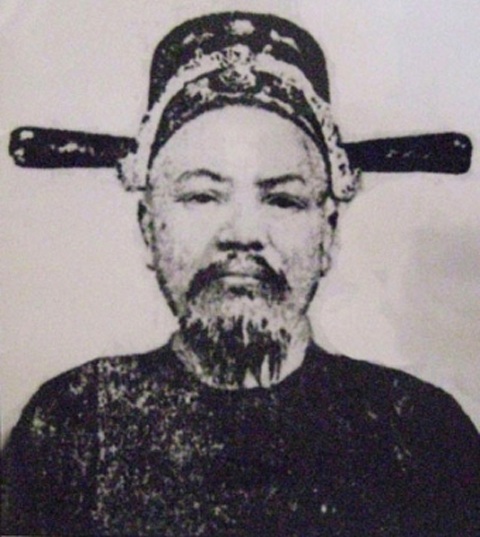
Trịnh Hoài Đức (1765 – 1825) was not only a founding meritocrat of the Nguyễn Dynasty but was also honored as the most outstanding historian and geographer of this era.
From a Scholar of Trấn Biên to a Top-Ranking Mandarin
Trịnh Hoài Đức (1765 – 1825), courtesy name Chỉ Sơn and pseudonym Hiệp Quế, was born and raised in Phước Long District, Trấn Biên Citadel (now Trấn Biên ward, Đồng Nai City). Despite having ancestors from Fujian, China, his soul and intellect were entirely intertwined with the vitality of the Vietnamese land. In 1788, as the sounds of the restoration movement echoed across the South, Trịnh Hoài Đức passed the imperial examinations and began his journey into a volatile political career.
With innate talent and steadfast loyalty, he quickly became one of King Gia Long's most trusted advisors. His career was a brilliant journey marked by holding the most critical "jugular" positions of the court: from Minister of Finance (Bộ Hộ) managing the national economy, and Minister of Internal Affairs (Bộ Lại) overseeing personnel, to the Deputy Governor (Hiệp Tổng Trấn) of Gia Định Citadel. Regardless of his role—whether as an envoy to the Qing Dynasty or stabilizing the borderlands—Trịnh Hoài Đức always maintained the demeanor of a righteous and upright gentleman, earning the King's trust and the people's admiration.
"Gia Định Thành Thông Chí": The Historical Records That Glorified the New Land
The greatest contribution that placed Trịnh Hoài Đức among the nation's most prominent cultural figures is the work Gia Định Thành Thông Chí. At that time, when the Southern region remained relatively vague and rudimentary in ancient bibliographies, Trịnh Hoài Đức diligently conducted field research and gathered data to complete a detailed "blueprint" of the geography, history, and humanity of this land.
Through six volumes - Geography of Stars and Terrestrial Divisions, Mountains and Rivers, Territorial Boundaries, Customs and Manners, Products and Resources, and Citadels and Fortifications (Tinh dịch chí, Sơn xuyên chí, Cương vực chí, Phong tục chí, Vật sản chí và Thành trì chí) - he painted a vibrant and prosperous panoramic picture of the South. Readers find therein not only a system of intricate waterways and rare products but also the lifestyle, habits, beliefs, and customs of the Vietnamese, Chinese, and Khmer communities living in harmony. This is not merely a geography book; it is historical evidence asserting the sovereignty and cultural stature of the Southern borders within the unified flow of the nation.
The Soul of a Poet and the Heritage of Ethnic Harmony
In addition to his role as a historian and geographer, Trịnh Hoài Đức was an eminent poet and the leader of the "Three Masters of Gia Định." In poetry collections such as Cấn Trai Thi Tập, he dedicated his most beautiful yet truthful words to praising the beauty of the Đồng Nai River, the Sác Forest, and the simple daily rhythm of the Southern people. His poetry possesses not only the nobility of a Confucian scholar but is also filled with the breath of reality, reflecting a profound spirit of tolerance and ethnic harmony.
His passing in 1825 was a great loss to the court. King Minh Mạng showed him the highest respect by granting the posthumous name Văn Khác and personally composing his epitaph. His life is a vivid testament to the success of ethnic harmony, where a person of Chinese descent could dedicate himself entirely and become an elite representative of Vietnamese culture.
Sustainable Values for years
Today, looking back at the 200-year journey of reclaiming the South, the name Trịnh Hoài Đức is always mentioned with reverence. He left behind not only books but also lessons in patriotism, integrity, and a cultural vision that transcended his time. His temple and tomb in Biên Hòa have now become National Historical Relics, serving as a place for future generations to pay their respects and learn from the spirit of a predecessor who "blazed the trail" for the culture of the South.
Trịnh Hoài Đức has entered eternity, but the "soul" of Gia Định Citadel and the waters of the Đồng Nai River will forever shine in every page of his manuscripts—pages that shaped the historical identity of a heroic land.
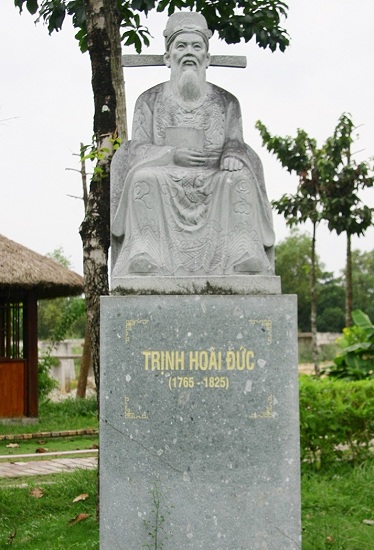
Statue of Trịnh Hoài Đức at the Cultural Celebrities Statue Area, Trấn Biên Temple of Literature.