Located in the historic and cultural province of Dong Nai, Tran Bien Temple of Literature has long been a prominent symbol of the "respecting teachers and valuing education" (tôn sư trọng đạo) spirit of the Southern people. More than just an architectural landmark, it is a convergence of historical, educational, and spiritual values, playing a vital role in preserving and promoting Vietnamese cultural identity across generations.
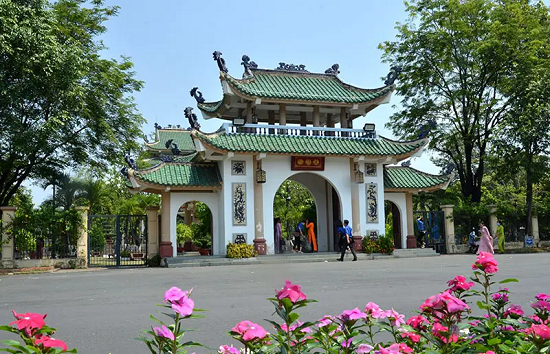
Tran Bien Temple of Literature
History of formation and development
Tran Bien Temple of Literature was built in 1715 under the reign of Lord Nguyen Phuc Chu. It was the first Temple of Literature in Southern Vietnam, marking a significant milestone in the development of Confucian education in the region at that time. The site served as a major cultural and educational center of old Dong Nai, nurturing talent and fostering a spirit of learning and human morality.
However, in 1861, the temple was completely destroyed during French colonial expansion into Cochinchina.
After more than a century, the temple was restored to commemorate the 300th anniversary of the formation and development of Bien Hoa - Dong Nai. Construction began on December 9, 1998, and it was officially inaugurated on February 14, 2002. Covering nearly 15 hectares (with the central area spanning about 2 hectares), Tran Bien Temple of Literature today is not only a tourist attraction but also a vital hub for regional cultural and educational activities.
Currently, the site hosts regular events such as award ceremonies for outstanding students, incense offerings, and traditional educational programs, all of which help nurture a studious spirit and national pride in the younger generation.
Architecture and key landmarks
The temple follows the traditional architecture of Vietnamese Temples of Literature, harmonizing spiritual elements with the natural landscape. Each structure carries deep symbolic meaning:
- Van Mieu Mon (Main Gate): A solemn, pavilion-style gate that serves as the boundary between the mundane world and the sacred space of knowledge.
- The Stele House (Nha Bia): Houses a stele written by Professor Vu Khieu, summarizing the nation's cultural and educational traditions and expressing the aspirations of the people of Dong Nai.
- Khue Van Cac (Pavilion of the Constellation of Literature): A symbol of intellect and literature. Historically, only those with exceptional literary talent were honored here.
- Thien Quang Tinh (Well of Heavenly Clarity): A square-shaped well symbolizing the Earth. Combined with the circular windows of Khue Van Cac (symbolizing Heaven), it represents the harmony between Heaven and Earth.
- Dai Thanh Mon (Great Success Gate): The entrance to the central area, symbolizing academic achievement. Traditionally, only those with profound knowledge and high academic rankings were deemed worthy of passing through this gate.
Sacred worship space and cultural figures
- Confucius Altar: Confucius, the founder of Confucianism, is honored in a central, solemn position to pay tribute to the tradition of learning.
- Bai Duong (Main Worship Hall): The heart of the temple.
- The Center Altar: Dedicated to President Ho Chi Minh, a Great Leader and World Cultural Celebrity (recognized by UNESCO in 1990).
The Statue of President Ho Chi Minh at the Tran Bien Temple of Literature
- Behind his statue is the Ngoc Lu bronze drum, a symbol of ancient Vietnamese culture.
- The Left Altar: Honors national cultural celebrities such as Chu Van An, Nguyen Trai, Nguyen Binh Khiem, Nguyen Du, and Le Quy Don.
- The Right Altar: Honors Southern cultural figures including Vo Truong Toan, Trinh Hoai Duc, Ngo Nhan Tinh, Le Quang Dinh, and Nguyen Dinh Chieu.
Significant artifacts
The temple preserves many artifacts of high historical value:
- Soil and Water from the Hung Kings' Temple: Representing the nation's roots.
- Thang Long Festival Drum: A gift from the Temple of Literature in Hanoi (Quoc Tu Giam).
- Doctoral Stele: A replica of the 1442 stele, emphasizing that "talented people are the primordial vitality of the nation."
Other constructions
- Van Vat Kho (Artifact Storage): Displays products from traditional craft villages, including ceramics, bronze castings, and sculptures.
- Thu Kho (Library): Stores books and documents regarding the history and culture of Dong Nai.
- Traditional House: A venue for seminars, workshops, and cultural activities.
Today, Tran Bien Temple of Literature is more than a historical relic; it is an educational center nurturing patriotism and a love for learning. Whether for tourists seeking historical insights or locals taking pride in their heritage, the temple remains a beacon of the "Southern studious spirit". Spanning over three centuries, it continues to bridge the gap between traditional values and the future, asserting the vital role of knowledge in societal development.