Marquis Nguyễn Hữu Cảnh (1650–1700) was a talented general and an outstanding administrator, credited with expanding the nation southward and laying the foundation for Saigon.
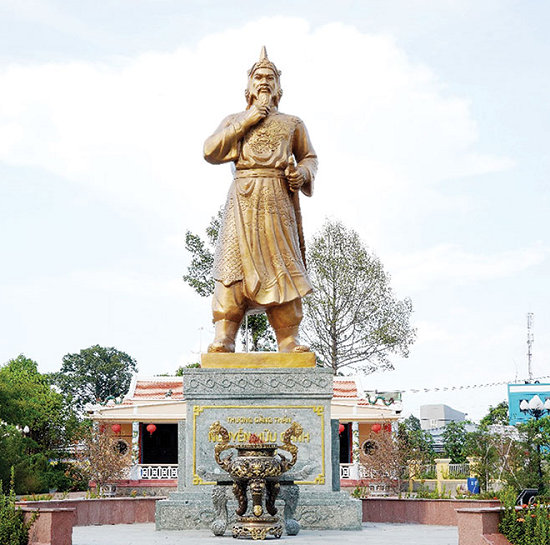
Statue of Marquis Nguyễn Hữu Cảnh
He was born in the Year of the Tiger (1650) in Chương Tín Commune, Phong Lộc District, Quảng Bình Province. According to researchers, his ancestor was Duke Nguyễn Bặc, an exceptional general under King Đinh Tiên Hoàng. He was also a descendant of the great statesman Nguyễn Trãi. His father, Marquis Wuhou Nguyễn Hữu Đạt, made significant contributions to the Nguyễn lords in their conflicts with the Trịnh lords.
Growing up during the Trịnh–Nguyễn civil war, Nguyễn Hữu Cảnh devoted himself to martial training so he could follow his father into battle. Despite his young age, he achieved many military successes and was appointed as a Cai cơ (a high-ranking military officer) by Lord Nguyễn Phúc Tần in his early twenties.
After his father's death in 1681, he and his elder brother Nguyễn Hữu Hào continued their father's career. In both work and conduct, Nguyễn Hữu Cảnh was known for his careful and thoughtful manner, earning widespread respect.
In early spring of 1698, Lord Nguyễn Phúc Chu appointed him as commander to head south, organize administration, establish governance, and define national territory. Traveling by sea, his forces moved upstream along the Đồng Nai River to Cù Lao Phố, then the most bustling port in the South. He subsequently surveyed the Saigon region and established the first two administrative units in the South: Phước Long District with Trấn Biên as its capital (Biên Hòa today), and Tân Bình District with Phiên Trấn as its capital (Ho Chi Minh City today), under Gia Định Prefecture.
At that time, Gia Định covered a vast area from Bình Thuận to Sài Gòn, Đồng Nai, Nhà Bè, and Long An. The territory expanded by thousands of square miles, with populations organized into settlements totaling about 40,000 households. According to Trịnh Hoài Đức in Gia Định thành thông chí - Record of Gia Dinh Citadel, “the land expanded over a thousand miles, and the population increased by forty thousand households."
Nguyễn Hữu Cảnh established administrative structures, including officials in charge of administration and taxation (ký lục), military affairs (lưu thủ), and judiciary (cai bộ), supported by clerical staff and armed units. For the Chinese community, he organized separate administrative groups such as Thanh Hà (in Trấn Biên) and Minh Hương (in Phiên Trấn). He also encouraged migration and land reclamation. Đại Nam liệt truyện records that he recruited settlers from Bố Chánh (now Quảng Bình) and resettled them in the South, establishing villages, setting tax systems, and registering households.
From a spontaneously settled frontier, Nguyễn Hữu Cảnh officially integrated and governed the region, guided its development, recruited more settlers, reclaimed land, set up administrative units, standardized taxation, and established population and land records—laying the foundation for the future development of Đồng Nai–Gia Định and the entire Southern region.
In 1700, he led troops to the southwestern frontier. Thanks to his prestige, he quickly stabilized the region. However, he later fell seriously ill and passed away at the age of 50.
In gratitude for his great contributions, the people of Biên Hòa–Đồng Nai converted Bình Hoành communal house into Bình Kính Temple to worship him with deep reverence, forever honoring his role in founding the Đồng Nai region.
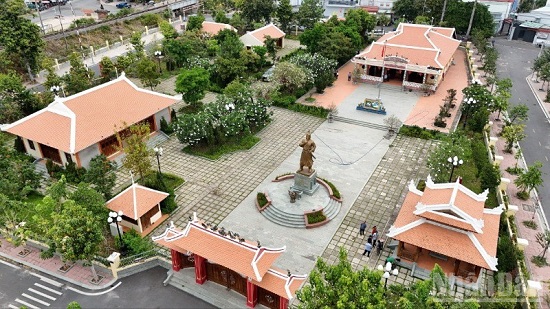
Panoramic view of the National Historical–Cultural Site: Nguyễn Hữu Cảnh Temple in Hiệp Hòa Ward, Biên Hòa City
In 2025, the death anniversary ceremony of Marquis Lễ Thành Nguyễn Hữu Cảnh was recognized by the Ministry of Culture, Sports and Tourism as a National Intangible Cultural Heritage. This recognition was announced during the 325th anniversary ceremony (June 2025) at the Nguyễn Hữu Cảnh Temple and Tomb in Hiệp Hòa Ward, Biên Hòa City, Đồng Nai Province. The ceremony is not only a commemoration of a founding figure but also a symbol of gratitude and remembrance for those who contributed to the development of Đồng Nai and the Southern region.
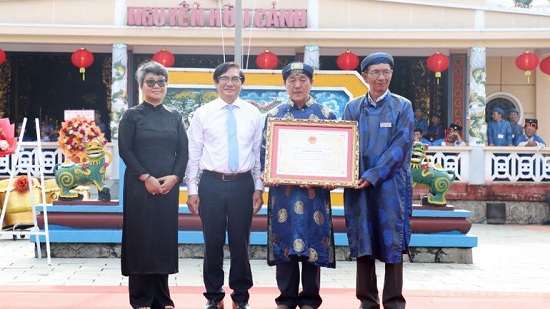
Leaders of Đồng Nai Province present the certificate recognizing the ceremony as a National Intangible Cultural Heritage
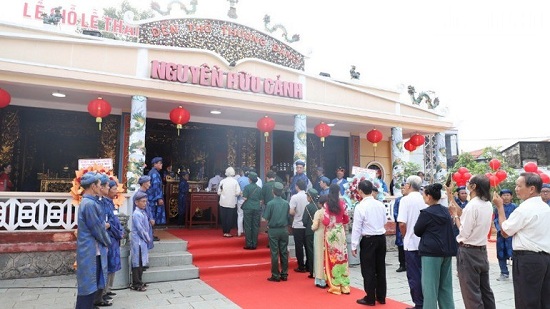
Local people offer incense at the commemoration ceremony of Marquis Nguyễn Hữu Cảnh